
Considering Stem Cell Therapy in Tijuana? Read This Before You Cross the Border
Don’t trade clinical quality and safety for a shorter drive. See why more patients are skipping border logistics and choosing a COFEPRIS-licensed, university-backed stem cell clinic in Puerto Vallarta.
UNAM Ethics Approval
Clinical protocols reviewed and approved by the UNAM Ethics Committee (CE/FESI/032024/1710), under an institutional collaboration agreement with UNAM (DGAJ-DPI-070225-1506).
Federal COFEPRIS License
COFEPRIS sanitary licenses: • Progenitor or Stem Cell Bank No. 253300CT040309 • Progenitor or Stem Cell Collection Center No. 253300926A0006
Batch Viability Certification
Science applied to medical practice: MSC batches released for clinical use typically present live-cell viability above 97%, verified for each batch before clinical release.
The Hidden Costs of Border Stem Cell Clinics
Choosing Tijuana for stem cell therapy can look like the most convenient option on paper: you can drive from California, prices seem lower and ads highlight “VIP transport” and “fast lane” access. What those brochures rarely explain are the real costs in time, stress and clinical quality that come with border-zone medicine.
The Border Wait
“Fast lane” passes and private shuttles sound simple, but in practice border crossings can still mean long, unpredictable waiting times at San Ysidro. For many patients, what was supposed to be a quick medical trip turns into hours of traffic, queues and stress on the days they should be resting.
Safety & Stress Around a Border Crossing
U.S. travel advisories classify several Mexican border areas, including parts of Baja California, as higher-risk zones than tourist destinations like Puerto Vallarta. Even when a clinic is serious, staying near a busy crossing usually means more noise, traffic and police activity. For patients already living with chronic illness, choosing a quieter, medically oriented area helps limit unnecessary stress on the nervous and immune systems during treatment.
The “Factory” Model
To keep prices low, many border clinics depend on high patient turnover and fixed “millions of cells” packages. That model makes it harder to dedicate time to a deep medical evaluation, tailor doses to your specific case or show you documented live-cell viability for the product you are receiving. You stop being a clinical file and start being a time slot.
How Our Puerto Vallarta Model Solves the Border-Clinic Trade-Offs
You don’t have to choose between staying close to the U.S. border and receiving serious, regulated stem cell care. Our model in Puerto Vallarta was built to remove the main risks of high-volume border clinics: unstable logistics, limited lab visibility and standardized packages.
| Aspect | Typical Tijuana border clinic | Puerto Vallarta with Immunotherapy Regenerative Medicine |
|---|---|---|
| Travel & logistics | Drive to a busy border crossing; schedule depends on traffic, queues and “fast lane” availability. | Direct flight to Puerto Vallarta; airport, clinic and hotel are in a consolidated medical-tourism corridor, minutes apart. |
| Clinical model | High patient turnover, fixed “millions of cells” packages designed for volume. | Capped daily intake, protocols planned case-by-case, with time for detailed evaluation and follow-up. |
| Lab & cell viability | Cells usually supplied by external labs; patients rarely see viability or release data. | In-house COFEPRIS-licensed lab; MSC batches released only after documented quality control and live-cell viability typically >97% at batch release. |
| Case selection | Broad indication lists; low barrier to accept cases as long as the package is paid. | Formal medical inclusion/exclusion criteria; we prefer to say “no” when our approach does not make clinical sense. |
| Treatment schedule | One- or two-day injection trips, limited time to monitor response or adjust therapy. | Structured treatment window with medical supervision, time between sessions and coordinated follow-up once you return home. |
| Environment during recovery | Busy urban border setting, frequent noise and traffic near the clinic and hotel. | Calm coastal city; short transfers and a more stable environment for rest, sleep and recovery. |
| Transparency & documentation | Marketing focuses on price and cell counts; limited written documentation of lab data in the patient file. | Written protocol, informed consent, batch documentation and viability certificate linked to your medical record. |
What Your Stem Cell Journey Looks Like in Puerto Vallarta
Leaving the border behind doesn’t mean jumping into the unknown. It means switching from a fast, package-based trip to a physician-led process with clear steps, documentation and follow-up.
Step 1 – You send your medical history, not your credit card
You start by sharing your diagnosis, recent imaging, lab work and current treatments. Our physicians review:
Whether your condition fits a regenerative and immunomodulatory approach.
What risks or red flags you already carry (cardiac, metabolic, neurological, etc.).
If your case doesn’t make clinical sense for our protocols, we tell you no instead of forcing you into a package.
Step 2 – A doctor explains your options—stem cells included, but not the only tool.
If your case is compatible, a physician—not a call center—explains:
What can and cannot be expected from a stem cell–based protocol in your situation.
How cell therapy integrates with your current medications and specialists.
The structure of a proposed protocol: products, number of sessions, estimated treatment window.
You receive this in writing, with space to ask questions before making any commitment.
Step 3 – You plan a medical trip, not a rushed border run
Once you agree on a protocol:
You choose flight dates that allow for rest on arrival, not same-day procedures after hours of driving.
We schedule your treatment days and clinical visits around those dates.
Our team assists with logistics coordination (appointments and timing) but we do not finance or sell tourism packages. The focus stays on your treatment.
Airport, clinic and recommended hotels are within a short drive—no border lines, no “fast lane” guesswork.
Step 4 – Your treatments happen in a controlled, documented environment
During your stay in Puerto Vallarta:
Cell-based therapies are administered using MSC batches released from our COFEPRIS-licensed lab, with documented live-cell viability at batch release.
Each session is supervised by medical staff who know your file—not rotating personnel seeing dozens of new faces a day.
Vital signs, symptoms and any adverse reactions are monitored and recorded, so the protocol can be adjusted if needed.
You are a clinical case with a documented protocol, not a one-day injection appointment.
Step 5 – You fly home—and we keep following the case
After you return home:
Follow-up is done through scheduled virtual consultations and written reports.
We track how you evolve over time (symptoms, scales, labs when applicable), instead of disappearing after the last session.
In both scenarios, the priority is a transparent, medically grounded understanding of your evolution over time.
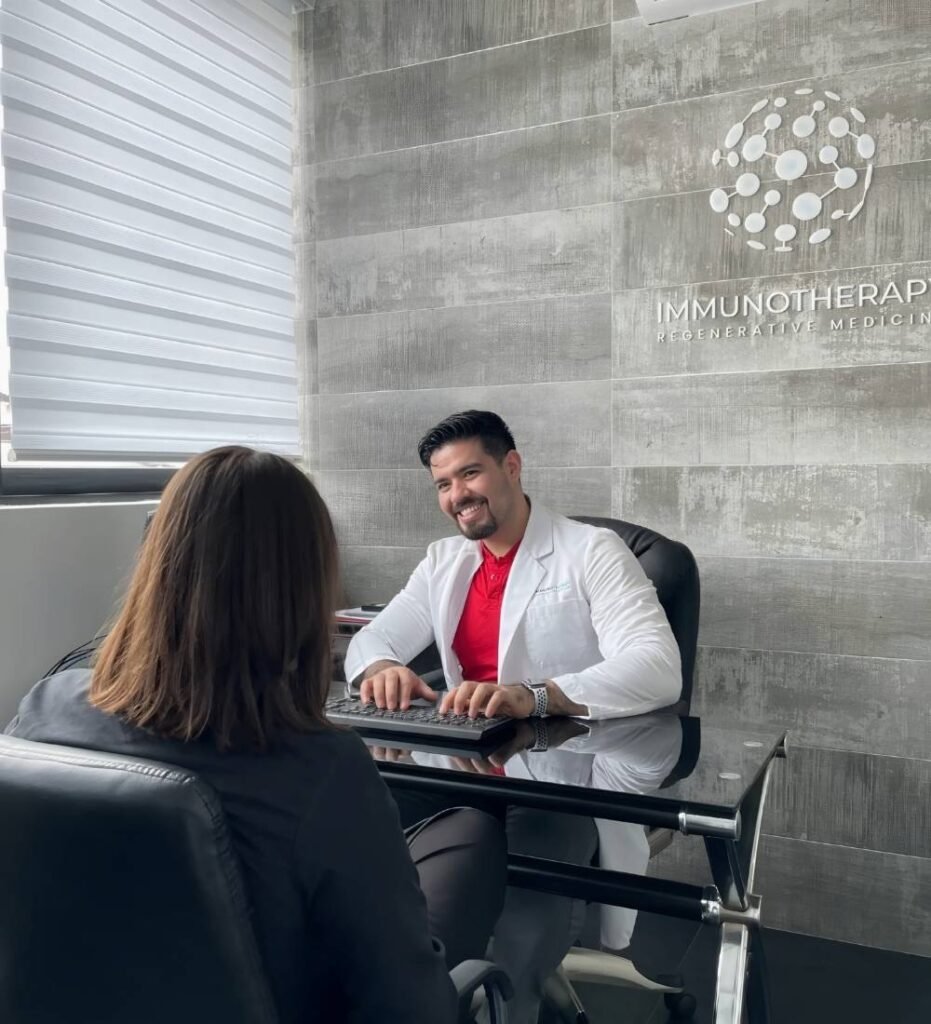
Therapeutic Areas Based on Biological Mechanisms
Many border clinics list long catalogues of conditions just to fill their stem cell packages. We limit our protocols to therapeutic areas where immunomodulation and regenerative medicine have a plausible biological rationale and where clinical evolution can be followed over time.
Systemic Autoimmune Regulation
For patients exhausted by long-term corticosteroids and immunosuppressants.
Mechanism & Protocol
Our protocols use mesenchymal stem cells (MSCs) and other biologic tools to help modulate dysregulated immune responses and inflammatory signaling. The goal is to support a more balanced immune profile and better control of systemic inflammation over time. Any changes in conventional immunosuppressive therapy are always decided by the treating specialists.
Neuroprotection & Cognitive Support
For patients and families facing progressive neurological symptoms or functional decline with limited options beyond symptomatic control.
Mechanism & Protocol
We focus on neuroinflammation, vascular support and the broader neural environment. These protocols aim to support stability, manage drivers of chronic inflammation and oxidative stress, and work alongside the nervous system’s own adaptive mechanisms. They do not promise cure or reversal of neurological diagnoses and must be integrated with standard neurological care.
Orthopedic & Tissue Support
For patients trying to avoid or delay major surgery or long-term dependence on pain medication for spine and joint problems.
Mechanism & Protocol
High-viability biologic products are administered through targeted local and/or systemic routes – including fluoroscopy-guided injections for spine-related conditions. The intention is to modulate the inflammatory cycle that accelerates structural damage, support tissue homeostasis and help reduce pain and functional limitation.
Biological Optimization & Healthy Aging
For individuals who want to address age-related decline in energy, tissue quality, sexual health and metabolic balance under medical supervision.
Mechanism & Protocol
Aging is associated with chronic low-grade inflammation and cellular exhaustion. Our optimization protocols combine regenerative and metabolic strategies aimed at supporting cellular efficiency and inflammatory balance. These are medical programs, not cosmetic shortcuts, and require comprehensive evaluation.
Treatment parameters—dose, frequency, sequence, route and site of administration—and any adjunctive therapies are individualized following a comprehensive clinical evaluation and aligned with your objectives. We do not offer standardized treatment packages.
The Team Behind Your Treatment
Behind every protocol and every comparison on this page there is a defined medical director, a clinical team and an in-house, COFEPRIS-licensed cell laboratory.
Ernesto Romero López, MD, M.Sc. – Medical Director
Multidisciplinary Clinical Team
In-House COFEPRIS-Licensed Cell Laboratory
Our medical and scientific teams work together on each case, aligning clinical judgment, laboratory data and ethical standards.
Real Patients, Real Clinical Journeys
These testimonials show how patients have experienced treatment at Immunotherapy Regenerative Medicine. Each case is unique and results vary, but these stories can help you understand how our approach feels in real life.
Posted onTrustindex verifies that the original source of the review is Google. My experience at Imunotherpy was excellent. Upfront with pricing and processes of the treatment as well as expected results. Everyone on the phone and in the office were very polite and respectful through the whole process. It has been less than the 3 month waiting period for my hair growth, but see a few new hairs already coming in along my hairline. Would definitely recommend for quality and pricing.Posted onTrustindex verifies that the original source of the review is Google. The doctor was very patient and very generous with his time. Thank you.Posted onTrustindex verifies that the original source of the review is Google. Staff members were very professional, polite, and experienced. Everyone took the time to explain and answer any and all questions. The procedures went well with no issues. It was a comfortable experience.Posted onTrustindex verifies that the original source of the review is Google. I had my procedure on May 14 ....I cannot believe the improvement in my vision more than 50% better. Im able to get a drivers license..I didn't think I would ever drive again. Immunotherapy was there for me from the very beginning,so helpful and supportive. Absolutely the best experience I've ever had dealing with the medical community. I highly recommend having stemcell therapy. I will be going back to Immunotherapy for a booster to get my vision 100%Posted onTrustindex verifies that the original source of the review is Google. Al principio tenía un poco de desconfianza, pero desde el momento en que llegué quedé impresionado. El lugar es hermoso, muy limpio y con un ambiente profesional y tranquilo. Todo el personal fue sumamente amable, atento y respetuoso. Los doctores me brindaron un servicio excelente y se tomaron el tiempo para explicarme todo con claridad. Me sentí muy bien atendido y cuidado en todo momento. Sin duda recomiendo este consultorio a cualquier persona que esté considerando un tratamiento con células madre. ¡Una experiencia maravillosa! 🙏💫 Y si te piden un depósito para hacer tu cita no te preocupes son muy honestos !! Cuando gustes llamar te recomiendo preguntes por Chantal ella es una excelente recepcionista!!Posted onTrustindex verifies that the original source of the review is Google. I attended their clinic in Puerto Vallarta from the UK for my vaccine damage/long covid and Crohn’s. The whole process from initial contact with their team, assessing my current health and issues, creating an individual plan of treatment and then receiving the treatment far exceeded my expectations. The whole team including the point of contact, doctors and all of the nurses were very professional, caring and made sure I was at ease and completely comfortable through the whole treatment. It is too early for me to gauge the final success of my treatment but due to being unknown and complicated it will take some time for the stem cells and other treatments to do their work which is expected. However from everything I have tried previously, this is the only thing I have done which I have already noticed some small improvements, which is hopefully a start of my full healing. Thanks to the teamVerified by TrustindexTrustindex verified badge is the Universal Symbol of Trust. Only the greatest companies can get the verified badge who has a review score above 4.5, based on customer reviews over the past 12 months. Read more
Frequently Asked Questions: Tijuana vs Puerto Vallarta
Are you saying that all Tijuana stem cell clinics are unsafe?
No. There are serious physicians and clinics in Tijuana. What we are saying is that the typical border model for stem cell therapy in Tijuana—high patient turnover, heavy dependence on external labs and trips compressed into one or two days—carries a different risk profile than a regulated, in-house model in Puerto Vallarta.
This page is not a blanket accusation; it is a physician-led comparison so you can decide whether a border-style stem cell clinic in Tijuana or a COFEPRIS-licensed clinic in Puerto Vallarta is more compatible with your expectations of safety, transparency and follow-up.
Is stem cell therapy in Tijuana safe?
Safety in stem cell treatment depends less on the city name and more on four variables:
How cells are sourced, processed and stored.
How viability and quality are documented before injection.
How many patients are treated per day (volume vs time per case).
How thoroughly your medical risks and indications are evaluated before offering stem cell therapy.
Many patients searching for “stem cell therapy in Tijuana” only see price lists and testimonials, not these internal variables. Our model in Puerto Vallarta is built around in-house lab control, capped daily intake and documented viability, so you can see the criteria behind your treatment—not just the marketing.
How do your prices compare with stem cell treatment in Tijuana, Mexico?
Most Tijuana stem cell clinics advertise packages that are cheaper than a regulated, in-house model in Puerto Vallarta—and much cheaper than the U.S.
Our pricing reflects:
Cell products processed in our own COFEPRIS-licensed lab.
Time allocated to case review, medical supervision and follow-up.
Limits on how many patients we accept per day.
If your only criterion is “the lowest price for stem cells in Tijuana”, we are unlikely to be the best fit. If your priority is documented quality, medical time and a controlled environment, it makes sense to compare the total value—not just the first price you see online.
Why would I fly to Puerto Vallarta instead of driving to a Tijuana stem cell clinic?
Driving to Tijuana for stem cells feels easy on paper: short distance from California or Arizona, familiar border. In reality, several patients tell us that:
Border crossings can involve long, unpredictable waiting times, even with “fast lane” options.
Clinics and hotels near the crossing are exposed to noise, traffic and border dynamics every day.
Treatment days become a mix of queues, transport and procedures, instead of a structured medical window.
Flying to a stem cell clinic in Puerto Vallarta changes the equation: you go directly from airport to clinic/hotel in a consolidated medical-tourism corridor, with short transfers and a schedule built around treatment and rest—not around border logistics.
Can I speak with a doctor before choosing between stem cell treatment in Tijuana or Puerto Vallarta?
Yes. Before you decide whether to go ahead with stem cell treatment in Tijuana, in Puerto Vallarta or not at all, you can:
Send your medical history, imaging and lab results for review.
Schedule a consultation with our medical team to discuss whether a regenerative and immunomodulatory protocol makes sense in your case.
Receive a written proposal (or a clear “no”) before making any travel or financial commitment.
The goal is that your choice between Tijuana and Puerto Vallarta is based on clinical reasoning and risk assessment, not on advertising alone.
Are you a Tijuana stem cell clinic?
No. Immunotherapy Regenerative Medicine is not a Tijuana stem cell clinic.
We are a regenerative medicine center located in Puerto Vallarta, Jalisco, Mexico, working with:
An in-house COFEPRIS-licensed cell laboratory.
Protocols reviewed by an ethics committee aligned with university-level standards.
International patients, mainly from the U.S. and Canada, who are willing to travel a bit farther in exchange for a different model of safety, documentation and follow-up.
This page exists precisely because many people searching for “stem cell therapy in Tijuana” are not aware that they have another option beyond the border.
Request a Medical Evaluation Before You Travel
Still comparing stem cell therapy in Tijuana with other options in Mexico? Call our team or submit this form to receive a free physician-led evaluation of your case and see whether a personalized protocol in Puerto Vallarta makes clinical sense for you.