Stem Cell Therapy for Autism in Mexico
A Science-Guided Approach to Neurodevelopmental Support
Our stem cell therapy for autism programs are designed to support children through a physician-led, science-based approach focused on neuroinflammation, immune signaling, and overall physiological balance. Rather than promising outcomes, we prioritize ethical care, clinical transparency, and individualized protocols—creating a supportive environment for learning, regulation, and connection.
- Ethical, science-based care: grounded in clinical reasoning and medical oversight.
- Whole-body approach: supporting neuroinflammation, immune balance, and systemic health.
- Personalized protocols: tailored to each child’s unique profile and needs.
- Family-centered care: clear communication, guidance, and ongoing support.
- 4.7-star Google rating
- HIPAA-secure
- Patients from 12 + countries
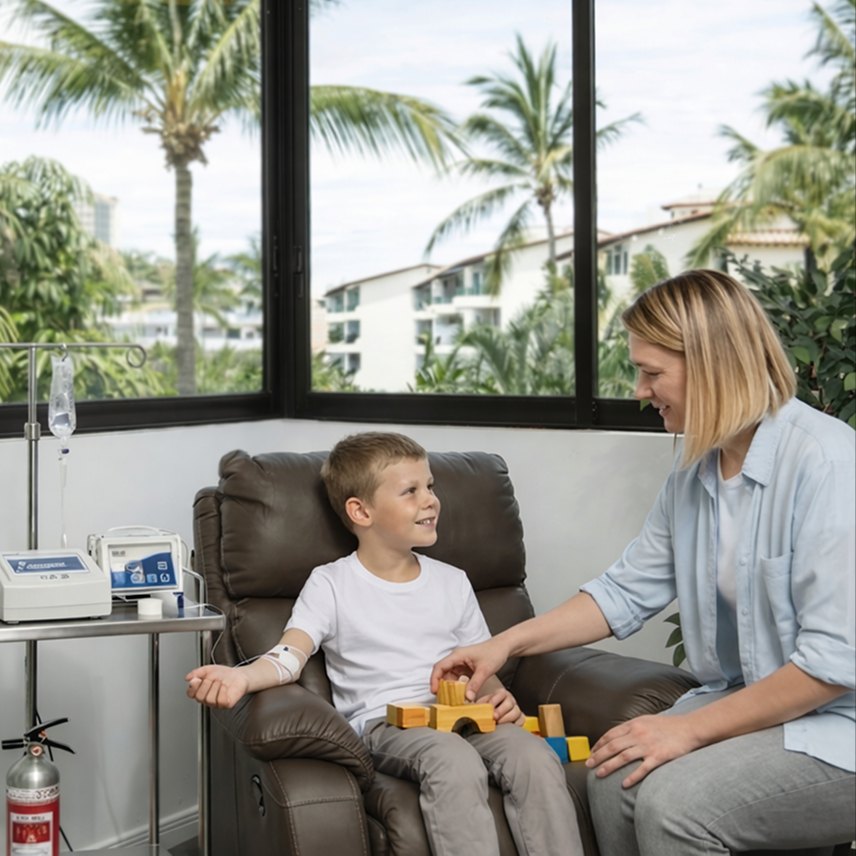
Why Progress May Plateau in Autism Treatment in Mexico, Even with Ongoing Therapy
Many families pursuing autism treatment in Mexico invest significant time and effort into therapies and routines, often seeing periods of progress followed by regression or instability in sleep, behavior, and emotional regulation.
In many cases, these challenges may extend beyond skill development, involving underlying biological factors such as neuroinflammation, immune imbalance, oxidative stress, and neurological overstimulation, which can influence how a child processes and responds to their environment. When these underlying processes are better supported, some children may experience improvements in attention, regulation, and overall engagement.
Supporting Regulation and Connection, Insights from the Best Countries for Stem Cell Therapy for Autism
As families explore options in the best countries for stem cell therapy for autism, many seek approaches that go beyond symptom management—focusing on supporting the body’s internal balance to create better conditions for development, regulation, and connection.
Emotional regulation support
May help promote calmer responses, fewer episodes of overwhelm, and improved ability to self-regulate in stimulating environments
Improved attention and engagement
Some children may show longer focus during play, learning, and interaction, appearing more present and connected
Communication development support
May support both verbal and non-verbal expression, including increased attempts to communicate and initiate interaction
Sleep and daily rhythm support
May contribute to more consistent sleep patterns and reduced night-time restlessness, supporting overall mood and energy
Support for inflammation and cellular balance
Designed to help regulate processes such as neuroinflammation and oxidative stress that may influence neurological function
Adaptability and flexibility
Some children may demonstrate improved tolerance to transitions and reduced stress responses to changes in routine
The Process at our Stem Cell Therapy for Autism Clinic: Medical Precision and Empathy at Every Step
At Immunotherapy Regenerative Medicine, our approach as a stem cell therapy for autism clinic is built on a structured, physician-led process designed to prioritize safety, personalization, and clinical clarity. Each step is guided by a multidisciplinary team that supports families with empathy, transparency, and medical rigor, ensuring that every decision is based on comprehensive evaluation and individualized care.
Evaluation and Diagnosis
Every case begins with a comprehensive evaluation to understand the child’s biological, functional, and developmental profile. Standardized clinical scales (ATEC, CARS, VABS) help establish a baseline and support objective follow-up over time.
This may include:
- Detailed medical history.
- Laboratory and imaging data (when available).
- Immune, metabolic, or neurological markers.
- Developmental and behavioral assessments.
Biological Preparation Phase
Creating a more stable physiological environment may help support the overall therapeutic process. This phase is designed to support the body’s internal environment prior to regenerative therapies.
The focus is on:
- Reducing inflammatory activity.
- Supporting immune balance.
- Improving metabolic stability.
Regenerative Medicine Session
All procedures follow structured safety protocols with continuous monitoring and individualized oversight. As a stem cell therapy for autism clinic, we integrate regenerative approaches within a controlled clinical setting under specialized medical supervision.
Protocols may include:
- Mesenchymal stromal cell (MSC)–based therapies.
- Biological support strategies such as exosomes or peptides.
- Complementary therapies designed to support cellular communication.
Post-Care & Ongoing Follow-Up
Our team remains in communication with families to support long-term follow-up and clinical continuity. Care continues beyond the treatment phase through:
- Personalized nutritional and lifestyle guidance.
- Scheduled virtual consultations.
- Ongoing evaluation using standardized clinical scales.
*All treatment parameters, including dose, frequency, and method of administration, are individualized following a comprehensive clinical evaluation, ensuring each protocol is aligned with the child’s specific needs.
Why Choose our Regenerative Medicine Treatments
Expert-guided, lab-developed, patient-centered: our immunotherapy is built around you.
Over 20 Years of Medical Experience
We’ve been pioneers in regenerative and integrative medicine for over two decades—led by a team of physicians, scientists, and clinical specialists.
In-House Advanced Stem Cell Lab
Our on-site lab produces high-viability mesenchymal stem cells (97–99%) under strict quality control—ensuring safety, potency, and consistency.
Comprehensive, Multimodal Therapies
We combine stem cells, exosomes, peptides, ozone, and detox strategies—targeting multiple pathways for maximum therapeutic benefit.
Full-Spectrum Patient Care
From initial assessment to long-term monitoring, we support your healing process every step of the way—with medical, emotional, and logistical care.
Truly Personalized Programs
Every protocol is built around your biology, goals, and medical history—no templates, no shortcuts. Just science-based precision care.
Trusted by Patients Worldwide
We welcome patients from across the globe who are seeking safe, ethical, and advanced cell-based therapies backed by science.
Regulated & Transparent
We follow strict safety standards aligned with COFEPRIS and FDA-equivalent protocols, ensuring medical ethics, transparency, and quality.
Travel-Ready Concierge Support
Our international concierge team offers guidance on ground transportation, lodging options, laboratory coordination, and general assistance throughout your visit.
Our Patients Experience
Posted on Google
 Paul M
Trustindex verifies that the original source of the review is Google.
My experience at Imunotherpy was excellent. Upfront with pricing and processes of the treatment as well as expected results. Everyone on the phone and in the office were very polite and respectful through the whole process. It has been less than the 3 month waiting period for my hair growth, but see a few new hairs already coming in along my hairline. Would definitely recommend for quality and pricing.Posted on Google Denny CorbettStaff members were very professional, polite, and experienced. Everyone took the time to explain and answer any and all questions. The procedures went well with no issues. It was a comfortable experience.Posted on Google
 Mary GatfieldI had my procedure on May 14 ....I cannot believe the improvement in my vision more than 50% better. Im able to get a drivers license..I didn't think I would ever drive again. Immunotherapy was there for me from the very beginning,so helpful and supportive. Absolutely the best experience I've ever had dealing with the medical community. I highly recommend having stemcell therapy. I will be going back to Immunotherapy for a booster to get my vision 100%Posted on Google
 Rosie VerdugoAl principio tenía un poco de desconfianza, pero desde el momento en que llegué quedé impresionado. El lugar es hermoso, muy limpio y con un ambiente profesional y tranquilo. Todo el personal fue sumamente amable, atento y respetuoso. Los doctores me brindaron un servicio excelente y se tomaron el tiempo para explicarme todo con claridad. Me sentí muy bien atendido y cuidado en todo momento. Sin duda recomiendo este consultorio a cualquier persona que esté considerando un tratamiento con células madre. ¡Una experiencia maravillosa! 🙏💫 Y si te piden un depósito para hacer tu cita no te preocupes son muy honestos !! Cuando gustes llamar te recomiendo preguntes por Chantal ella es una excelente recepcionista!!Posted on Google
 Ryan DobleI attended their clinic in Puerto Vallarta from the UK for my vaccine damage/long covid and Crohn’s. The whole process from initial contact with their team, assessing my current health and issues, creating an individual plan of treatment and then receiving the treatment far exceeded my expectations. The whole team including the point of contact, doctors and all of the nurses were very professional, caring and made sure I was at ease and completely comfortable through the whole treatment. It is too early for me to gauge the final success of my treatment but due to being unknown and complicated it will take some time for the stem cells and other treatments to do their work which is expected. However from everything I have tried previously, this is the only thing I have done which I have already noticed some small improvements, which is hopefully a start of my full healing. Thanks to the teamVerified by TrustindexTrustindex verified badge is the Universal Symbol of Trust. Only the greatest companies can get the verified badge who has a review score above 4.5, based on customer reviews over the past 12 months. Read more
Frequently Asked Questions About Our Stem Cell Therapy for Autism Treatments
Where do the cells come from, and how is their safety guaranteed?
We work with COFEPRIS-authorized providers who perform tests for sterility, viability, endotoxins, and mycoplasma before releasing each batch.
Every application is reviewed and approved by our medical team to ensure that the cells meet the highest standards of purity and biological safety.
How much does stem cell therapy for autism in Mexico cost, and what does it include?
The cost of stem cell therapy for autism in Mexico varies depending on the patient’s clinical profile and personalized treatment plan.
At IRM, the treatment includes a comprehensive medical evaluation, the application of specialized regenerative therapies, pediatric medical supervision, and follow-up assessments using recognized scales (ATEC, CARS, VABS).
To receive a personalized estimate, you can schedule a free consultation and learn more about our treatment packages.
Is stem cell therapy for autism safe in children?
All procedures take place in a controlled clinical environment with cardiorespiratory monitoring and moderate sedation when indicated, always supervised by pediatric anesthesiologists.
Clinical studies on stem cell therapy for autism in Mexico show a favorable safety profile, with side effects generally mild and temporary, such as fatigue or low-grade fever.
When might I see results, and how are they measured?
Each child responds differently. Many families observe noticeable changes within 1 to 3 months after treatment—such as better eye contact, improved sleep, reduced irritability, and increased communication.
IRM measures these changes objectively using standardized tools (ATEC, CARS, VABS) at 3-, 6-, and 12-month follow-ups, allowing progress to be tracked in a clear, quantifiable way.
Is my child a candidate for stem cell treatment for autism in Mexico?
Before recommending any intervention, we conduct a multidisciplinary evaluation that may include medical history, MRI/EEG, immune profiling, and neuropsychological assessment.
Each case is reviewed individually to ensure the treatment is safe, ethical, and medically justified.
How long does the process take, and what happens after the treatment?
The clinical process takes place at our facility in Puerto Vallarta through a structured, short-term stay that includes evaluation, intervention, and immediate post-treatment care.
Before returning home, parents receive a personalized nutrition guide designed to support immune and metabolic balance in the weeks following treatment.
We also schedule follow-up assessments to monitor progress and maintain direct communication with our medical team.